


India’s pharmaceutical industry is going through one of its most important regulatory changes in decades and now stands at a critical crossroads. The revised Schedule M, introduced by the Ministry of Health and Family Welfare (MoHFW) and enforced by the Central Drugs Standard Control Organisation (CDSCO), brings stricter Good Manufacturing Practice (GMP) requirements aligned with World Health Organization (WHO) standards.
These changes are designed to raise the quality, safety, and reliability of Indian medicine, improve patient protection, and boost global acceptance of Indian products.
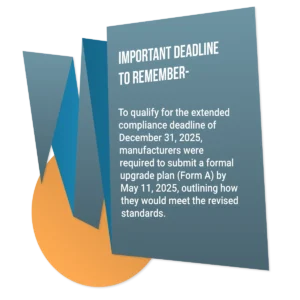
However, the impact on small and medium pharmaceutical manufacturers has been profound. Today, more than 60% of India’s 8,500 registered MSME pharma units face the risk of shutting down if they fail to comply with the December 31, 2025, deadline—putting essential drug supplies and jobs at stake.
What Is Revised Schedule M?
Schedule M is part of the Drugs & Cosmetics Act, 1940 and lays down mandatory GMP guidelines that all pharmaceutical manufacturers in India must follow. The revised Schedule M introduces significant updates that go beyond basic compliance, emphasizing modern quality systems, risk-based approaches, validated processes, and digital record-keeping.
In simple terms, the updated Schedule M shifts the industry from a checklist-based approach to a system-based, control-focused process where quality must be thoroughly in practice – not just documented.
Why Is the Government Enforcing These Changes Now?
These changes are being enforced now for three key reasons:
1. To Align with Global Standards
India aims to bring its drug manufacturing practices on par with globally accepted GMP frameworks, particularly with the global regulators like the WHO. This is to help Indian medicines compete in regulated markets and build trust internationally. This means, if a company wants to export to the US or European Market, they must comply first. Complying with Schedule M will make their transition smoother.
2. To Improve Patient Safety and Product Quality
The revised norms focus on consistent quality, traceability, and risk management to reduce defects, recalls, and substandard products in the market. In case a batch fails the quality tests, it’s mandatory for the company to perform a detailed root cause analysis and take corrective action rather than just documenting it or issuing a re-test and dismissing it.
3. To Enable Future-Ready Pharma Manufacturing
With rapid advances in biotechnology, personalized medicine, and advanced therapies, manufacturing processes are becoming more sophisticated. Updated regulations help ensure Indian facilities can handle these modern challenges.
For example: A company planning to export in the future will already have WHO-aligned systems in place already, reducing the need for major rework later.
Why Are Small Pharma Units Finding It Hard to Comply with Revised Schedule M?
Many small and mid-sized pharma manufacturers do wish to follow the new rules and stay inline with them, but they face challenges such as-
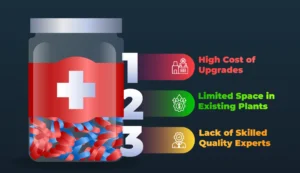
1. High Cost of Upgrades
To meet the revised Schedule M standards, companies need to upgrade their facilities, equipment, and quality systems. This can cost anywhere between ₹2 crore and ₹10 crore for a single plant. For many MSMEs that are already running on loans or tight budgets, this level of investment is simply not affordable.
2. Limited Space in Existing Plants
A large number of small pharma units operate from compact facilities of around 10,000 sq ft. The new rules require better layouts, separate areas, and controlled environments. Many units do not have enough physical space to expand or redesign their plants to meet these requirements.
3. Lack of Skilled Quality Experts
Advanced GMP compliance needs strong knowledge of validation, risk management, and detailed quality documentation. Smaller companies often do not have experienced quality professionals in-house, making it difficult to meet regulatory expectations without external help.
Key Compliance Requirements Under Revised Schedule M:
To meet the new standards, pharmaceutical MSMEs must focus on four core areas:
1. Pharmaceutical Quality System (PQS)
This ensures end-to-end control over quality activities such as documentation, deviations, CAPAs, audits, and change management.
Example:
If a manufacturing parameter changes, the system should record who approved it, why it was changed, and how it impacts product quality.
2. Quality Risk Management (QRM)
Manufacturers must identify, assess, and control risks across manufacturing, storage, and distribution.
Example: If a raw material has variable quality, quality risk management helps decide whether additional testing or supplier controls are needed.
3. Infrastructure and Facility Upgrades
This includes advanced HVAC systems, cleanrooms, controlled environments, and validated equipment to ensure consistent manufacturing conditions.
Example:
Temperature and humidity in a packing area must remain within limits to prevent product degradation.
4. Enhanced Documentation and Validation
The revised rules require clear SOPs, complete batch records, audit trails, and validated processes throughout the product lifecycle.
Example:
Every critical process—mixing, compression, filling—must be validated to prove it consistently produces quality products.
What can help MSME Pharma Manufacturers?
While the revised Schedule M may seem difficult for MSME pharma manufacturers, these challenges are not impossible to overcome. The key is to focus on process control, smart use of technology, and structured quality systems rather than relying only on manual work or expensive short-term fixes. This is where Quality Management Software (QMS) becomes a practical and effective solution.
Here’s how it helps-
1. From Paper-Based Work to Controlled Digital Processes
Schedule M requires controlled SOPs, accurate batch records, documented deviations, and clear approval trails. When these are managed manually, gaps are common and inspections become stressful.
A QMS digitizes all quality processes—documents, deviations, approvals, and records—into one controlled system.
Why this matters for Schedule M:
It ensures documentation is complete, up to date, and traceable at all times, exactly as regulators expect.
2. Building a Compliant Pharmaceutical Quality System Without Heavy Costs
Revised Schedule M makes a formal Pharmaceutical Quality System (PQS) mandatory, covering CAPA, audits, training, and change management. Setting this up manually often requires multiple tools and external consultants. A QMS brings all elements under one unified platform.
Why this matters for Schedule M:
It allows MSMEs to establish a compliant Quality System in a cost-effective and scalable way.
3. Meeting Validation and Data Integrity Expectations
Schedule M places strong emphasis on validated processes and reliable data. Regulators expect proof that processes work consistently and records cannot be manipulated. A QMS automatically maintains audit trails, version history, and approval records for all quality activities.
Why this matters for Schedule M:
It demonstrates control, consistency, and data integrity during CDSCO inspections.
4. Making Quality Risk Management a Daily Practice
Risk-based thinking is a key pillar of revised Schedule M. However, many MSMEs struggle to apply risk management in a structured way. A QMS enables teams to identify risks, assess their impact, assign actions, and track outcomes across operations.
Why this matters for Schedule M:
It shows regulators that risks are proactively managed—not addressed only after failures occur.
5. Turning Deviations and CAPAs Into Preventive Action
Under Schedule M, recording deviations is not enough. Manufacturers must investigate root causes and prevent recurrence. A QMS links deviations, investigations, root cause analysis, and CAPAs into a single workflow.
Why this matters for Schedule M:
It ensures timely closure of issues and reduces repeat observations during audits.
6. Staying Inspection-Ready at All Times
With stricter enforcement by CDSCO, inspections are becoming more frequent and detailed. Searching for files or missing records can quickly lead to non-compliance. A QMS keeps all quality records centralized, searchable, and inspection-ready.
Why this matters for Schedule M:
It enables faster inspections, smoother audits, and greater regulator confidence.
Revised Schedule M is a long-term shift toward stronger, globally aligned quality systems. For pharma MSMEs, adopting a Pharmaceutical Quality Management Software is not just a compliance decision—it is a business decision.
How Can QMS Help Pharma Manufacturers?
QualityPro QMS helps pharma MSMEs meet revised Schedule M requirements quickly and practically. It supports:
- Pharmaceutical Quality System (PQS) mandated under Schedule M
- Quality Risk Management (QRM) and deviation control
- Validated documentation, audit trails, and data integrity
- CAPA and change management workflows
- Always-ready CDSCO inspections
By digitizing quality processes, QualityPro QMS simplifies Schedule M compliance without adding cost or complexity. If you’re an MSME pharma manufacturer looking to become Schedule M compliant, then schedule a quick compliance walkthrough to see how it supports revised Schedule M readiness.